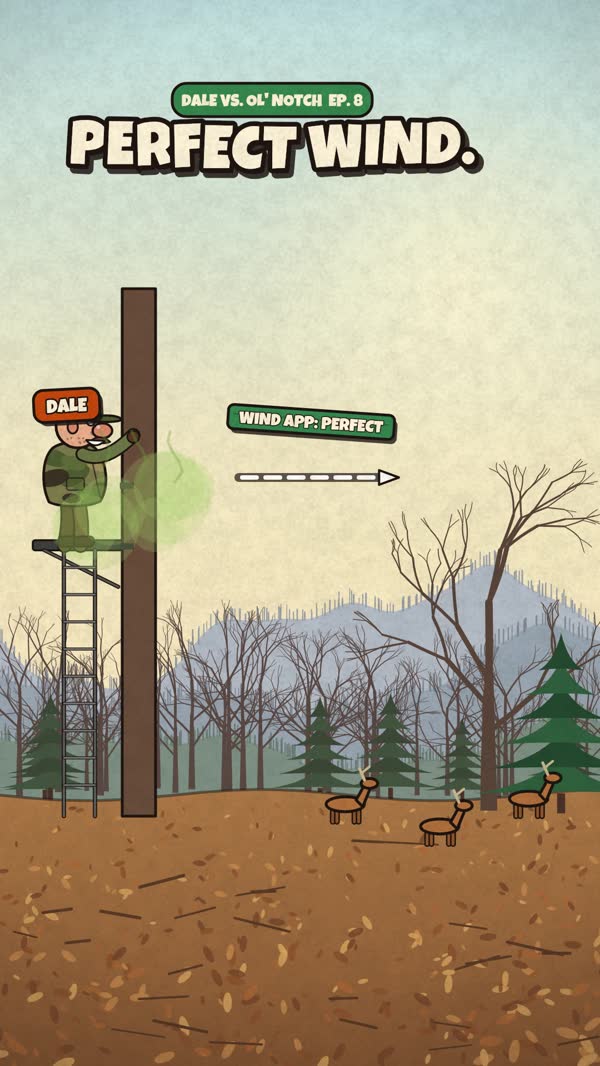
01What the research found
RECEIPT
The study
Slope winds: up by day, down in shadow
WhereFire weather guideSampleNot a deer study
What they did
Explains how local slope winds behave, for firefighters estimating fire behavior.
What they found
- "Slope Winds are driven by heat exchange at the slope surface."
- They react quickly to sun on the slope, "with upslope breezes starting within a few minutes." Upslope winds generally run 3 to 8 mph.
- The switch to downslope "begins soon after the first slopes go into afternoon shadow."
- "Downslope winds are very shallow and of a slower speed than upslope winds, generally 2-5mph."
- "Critical winds," like frontal and thunderstorm winds, "easily override local wind influences."
- But valley inversions can keep general winds from reaching the midslopes and valley floor.
Limits
- A fire weather guide, not a deer study. Your hill, shade and cover can change it.
- The guide says "slope winds." "Thermals" is hunter shorthand for the same thing.
- Slopes that lose the sun early, like east-facing ones, can switch downhill in the afternoon.
Source. National Wildfire Coordinating Group. PMS 437, Fire Behavior Field Reference Guide, "Weather: Estimating Winds for Fire Behavior." www-nwcg.fs2c.usda.gov →
RECEIPT
The study
Which slope switches first
WhereFire weather trainingSampleNot a deer study
What they did
Explains how slope direction changes the timing of slope winds.
What they found
- "Upslope winds develop on east-facing aspects first because they receive direct sunlight earlier."
- West-facing slopes start upslope and peak later in the day than east and south slopes.
- On south-facing slopes, downslope winds begin after the slope loses direct sun, "usually after sunset."
Limits
- Fire weather training, not a deer study.
Source. COMET Program (UCAR, sponsored by NWS and NOAA). "Introduction to Fire Behavior." meted.ucar.edu →
RECEIPT
The study
A light-wind, clear-sky pattern
WhereMeteorology glossarySampleNot a deer study
What they did
Defines mountain-valley wind systems.
What they found
- Slope and valley winds are a daily cycle "during clear or mostly clear periods of weak synoptic flow." That means light general winds.
- At sunrise, the east-facing slope gets sun earlier than the rest of the valley.
Limits
- A glossary entry, not a deer study.
- It doesn't use the word "override." The NWCG guide does.
Source. American Meteorological Society, Glossary of Meteorology, "Mountain-valley wind systems." glossary.ametsoc.org →
RECEIPT
The study
Looking for a deer study
WhereSearches run Oct 17, 2026SampleDeer papers and hunting sites
What they did
Searched for deer studies that test travel, bedding or detection against thermals or slope winds. A second checker ran its own search.
What they found
- Neither search found one.
- A winter bed study in Maryland (Lang and Gates 1985) looked at cover at 140 night beds. Wind, aspect and air drainage weren't measured.
- A winter bed study in Ontario (Armstrong, Euler and Racey 1983) looked at cover, slope and aspect for heat loss. No airflow or scent test.
- A mule deer bed study (Germaine et al. 2004) recorded wind at beds but never analyzed it.
- The closest hit, Lingle and Wilson 2001 in Ethology, tested whether deer were upwind or downwind of a person. Wind direction had no significant effect on how far away the deer became alert. It didn't test slope winds.
- Hunting sites explain thermals but cite no deer study that tests them.
Limits
- Both searches were reasonable but not exhaustive. This means "none I found," not "none exist."
Source. My open check and an independent check, Oct 17, 2026.
02My read
MY READMy tactic, not a study result
Check which way your slope faces, and time your sit to the sun.
No deer study I found tested this. That's how I hunt it, not a study result.
03Field notes
- Once the sun hits your slope, expect the air to start drifting uphill within minutes. East-facing slopes go first.
- Once your slope goes into shadow, expect a slow, shallow slide downhill.
- On a strong-wind day, the general wind can override the thermals.
- Check your own state's season dates and legal hours with your state wildlife agency.