01What the research found
RECEIPT
The study
How long a buck stays with a doe
WherePennsylvania, four study areasSample27 meetups between collared bucks and collared does, from 5 bucks and 7 doesWhenDeer captured 2013-2016
What they did
Used hourly GPS collars to flag times a buck and a doe stayed within an average of 100 meters of each other.
What they found
- Meetups averaged 7.9 hours.
- The shortest lasted 1 hour and the longest 78.9 hours, a little over 3 days.
Limits
- Small sample: 27 meetups from just 5 bucks.
- Only meetups between two collared deer could be seen. Being close isn't proof of tending.
- A stricter filter found 18 meetups from 4 bucks.
Source. Buderman et al. 2021. "Caution is warranted when using animal space-use and movement to infer behavioral states." Movement Ecology 9:30. Penn State and Pennsylvania Game Commission researchers among the authors. movementecologyjournal.biomedcentral.com →
RECEIPT
The study
Buck movement during peak breeding
WhereSouthwest Wisconsin (parts of Dane, Iowa and Grant counties)Sample188 GPS-collared bucksWhen2017-2020, October 15 to December 1 each year
What they did
Tracked how far bucks moved week by week through the rut, by age.
What they found
- Peak breeding ran October 23 to November 12.
- Movement peaked the week of November 5 to 11, inside peak breeding, not after it.
- Bucks 3 and older had the most up-and-down movement. The authors suggest older bucks may switch back and forth between searching for does and tending them.
Limits
- One region of Wisconsin. Rut timing differs by region.
- The authors didn't count tending events, so this can't say how long any one buck was tied up.
Source. Hunsaker, Gilbertson, Storm and Turner. 2025. "The Breeding Season and Movement Ecology of Male White-Tailed Deer in Southwest Wisconsin." Ecology and Evolution 15(7):e71589. pmc.ncbi.nlm.nih.gov →
02My read
MY READMy tactic, not a study result
One buck can tie up for a while. The woods don't shut down. Keep hunting. When one buck's busy, another one's looking.
I looked for a study showing every buck in an area disappearing for a week at the same time, and I couldn't find one in the sources I opened.
03Field notes
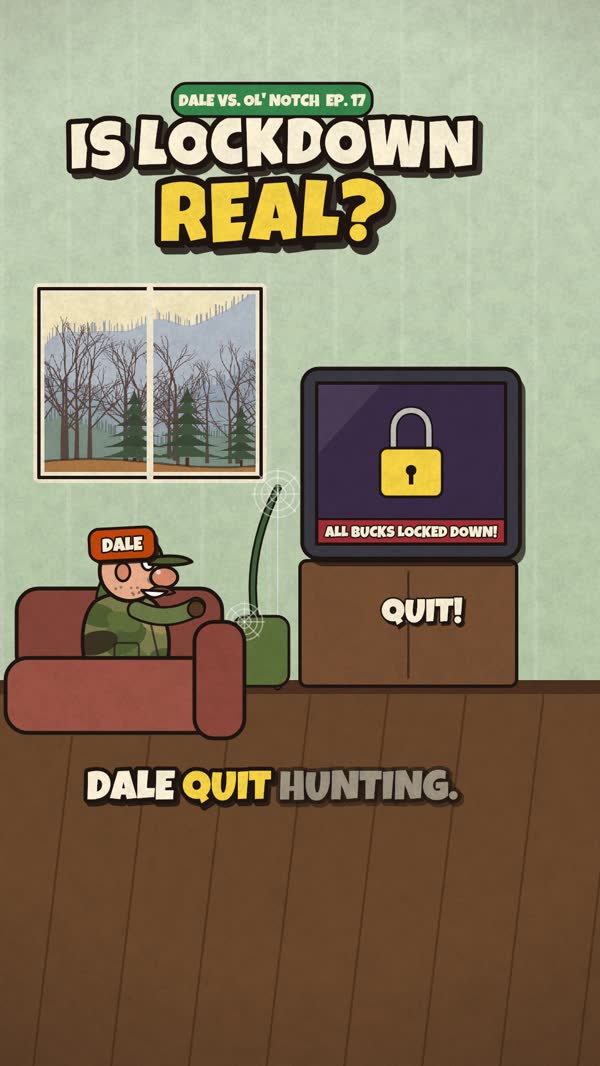
- Don't quit hunting in early November because you heard "lockdown." The Wisconsin bucks moved the most during peak breeding.
- A buck that vanishes for a day or two may be with a doe. Another one may be cruising.
- Older bucks switch between searching and tending, so keep your best sits on the calendar.
- Check your own state's season dates and legal hours with your state wildlife agency.