01What the research found
RECEIPT
The study
How slope winds switch in the evening
WhereMountain and hill terrain (fire weather guidance)SampleNot a study. A national fire weather field guide.WhenCurrent edition, opened November 2026
What they did
Fire weather forecasters describe how slope and valley winds change through the day.
What they found
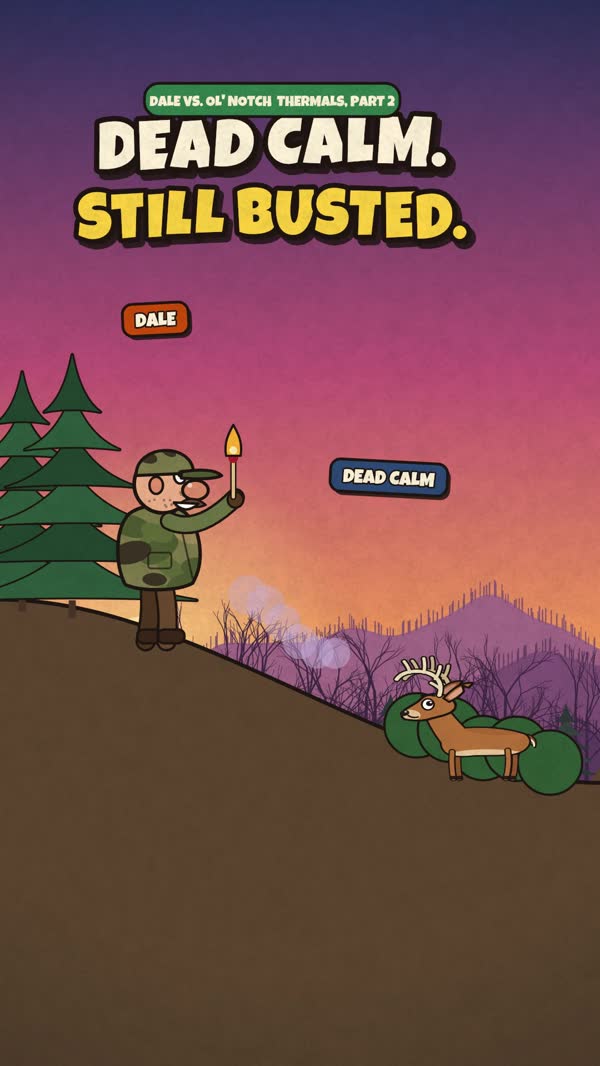
- On slopes going into shadow, the switch has three steps: the upslope wind dies, there's a period of relative calm, then gentle flow downslope.
- The cooled, denser air is stable, so the downhill flow tends to be smooth and layered.
- Upslope winds generally run 3 to 8 mph. Downslope winds are very shallow and slower, generally 2 to 5 mph.
- Valley winds generally lag 1 to 3 hours behind slope winds, so a creek bottom can still blow the old way after the slope has turned.
Limits
- Fire weather guidance, not a deer study.
- "Generally" ranges. Your terrain, cloud cover and weather systems change the timing.
Source. National Wildfire Coordinating Group. PMS 437 Fire Behavior Field Reference Guide, "Weather: Estimating Winds for Fire Behavior." www-nwcg.fs2c.usda.gov →
02My read
MY READMy tactic, not a study result
No deer study I found tested how deer use thermals. That calm is the air turning around, not a free pass. Sit the stand that still works once the air is sliding downhill.
03Field notes
- Treat a dead calm at dusk as the switch starting, not as a safe wind.
- Before the sit, picture where your scent goes once the air slides downhill, and pick the stand that still works then.
- Watch the creek bottom. It can keep blowing the old way for a while after the slope turns.
- For the basics of which way the air moves and when, see Episode 8, How Do Thermals Work?
- Check your own state's season dates and legal hours with your state wildlife agency.